


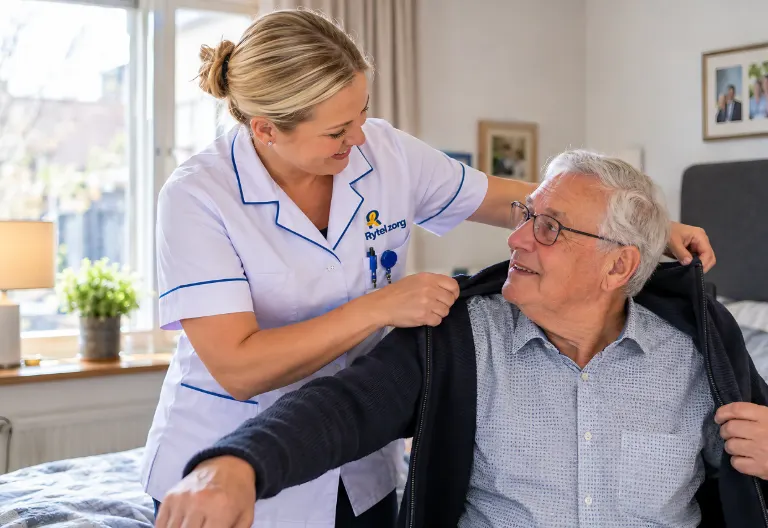
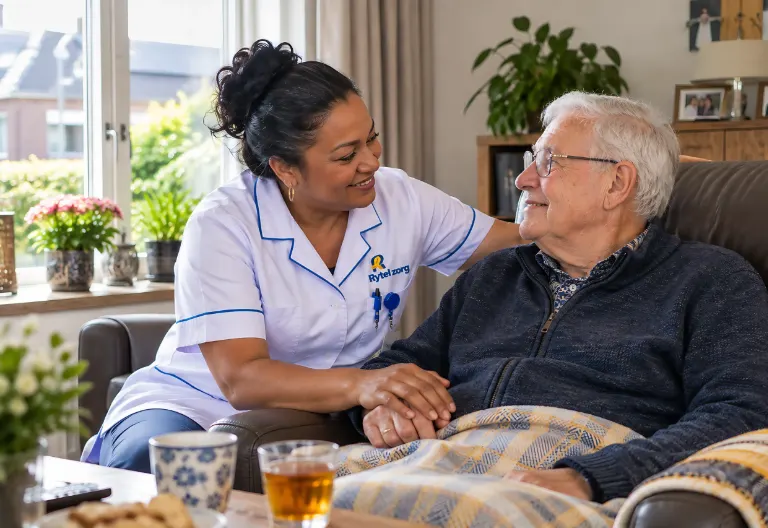
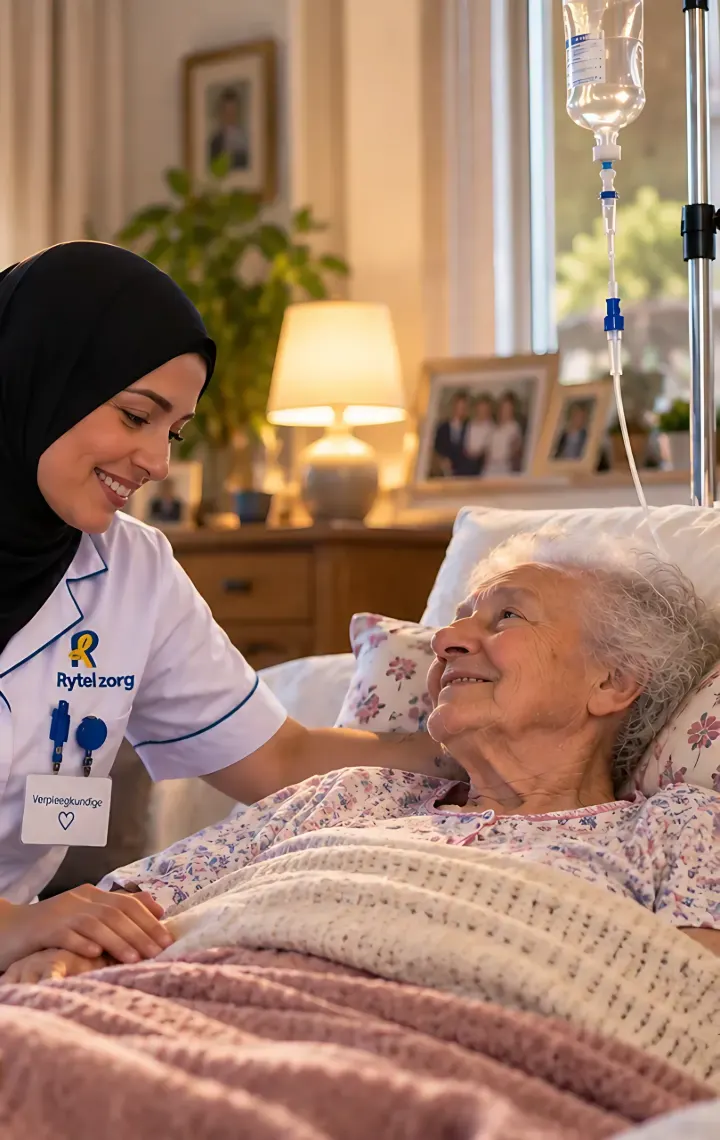



Many people want to spend the last period of their life at home, in their own bed, surrounded by the people they love. With good care, this is often possible. In this article we explain what palliative care at home involves, who is involved and how to arrange it.
What is palliative care?
Palliative care is care for people with an illness that can no longer be cured. The aim is no longer a cure, but the best possible quality of life. There is attention for physical symptoms such as pain, breathlessness or fatigue, and also for emotional, social and existential questions.
Palliative care is not only care in the last days. It can start months, sometimes years, earlier. The final phase, when the end of life is near, is also called terminal care.
Who is involved?
- The GP is in charge of the medical care and coordinates with specialists. The GP also discusses wishes around the end of life with you.
- Home care helps with personal care, comfort, medication as agreed and noticing changes.
- Family and loved ones are often involved day and night. They deserve attention and support too.
- Terminal care volunteers are available in many regions for a few hours or a night, so the family can rest.
What can care at home include?
- personal care: washing, changing, mouth care and preventing pressure sores;
- comfort: a good position, calm and attention to pain and restlessness, in consultation with the GP;
- help with medication as agreed with the GP and pharmacy;
- night care, so that loved ones can sleep;
- presence and a listening ear, for the person who is ill and for the family.
Care day and night: 24-hour care
In the final phase more care is often needed, including at night. With 24-hour care or night care, someone is always nearby. This brings calm to the person who is ill and prevents the family from becoming exhausted. 24-hour care is also possible for people who are not in the final phase of life but permanently need intensive care.
How is palliative care at home paid for?
- Health Insurance Act (Zvw). Nursing and personal care at home fall under district nursing. The district nurse sets the indication. You do not pay a deductible for this.
- Long-term Care Act (Wlz). If someone already has a Wlz indication, care usually runs through the Wlz.
- Personal budget (pgb). In some situations you can purchase the care yourself with a pgb.
In the palliative phase things can move quickly. So do not wait too long to apply for care.
Practical tips for loved ones
- Discuss wishes in good time: where does your loved one want to be, and who do they want around them?
- Make a rota with family and friends, so that not everything falls on one person.
- Keep important phone numbers in a fixed place: GP, out-of-hours GP service, home care.
- Ask about aids such as a hospital bed. These can often be borrowed quickly.
- Allow yourself rest. A good night’s sleep makes all the difference.
Palliative care and 24-hour care from RytelZorg
RytelZorg provides palliative care, night care and 24-hour care at home in Voorburg, Leidschendam, Wassenaar and The Hague. You have a permanent care team that knows you and your loved ones. We work closely with the GP and can be reached 24 hours a day, 7 days a week.
See our page on palliative care and 24-hour care, contact us or call 06 14 97 58 70. We will think along with you straight away.